Condition is the story the paper tells.
Condition is not snobbery. It is a way to describe what has happened to a stamp and how safely it can sit in a collection. Learn the visible checks before you judge quickly.
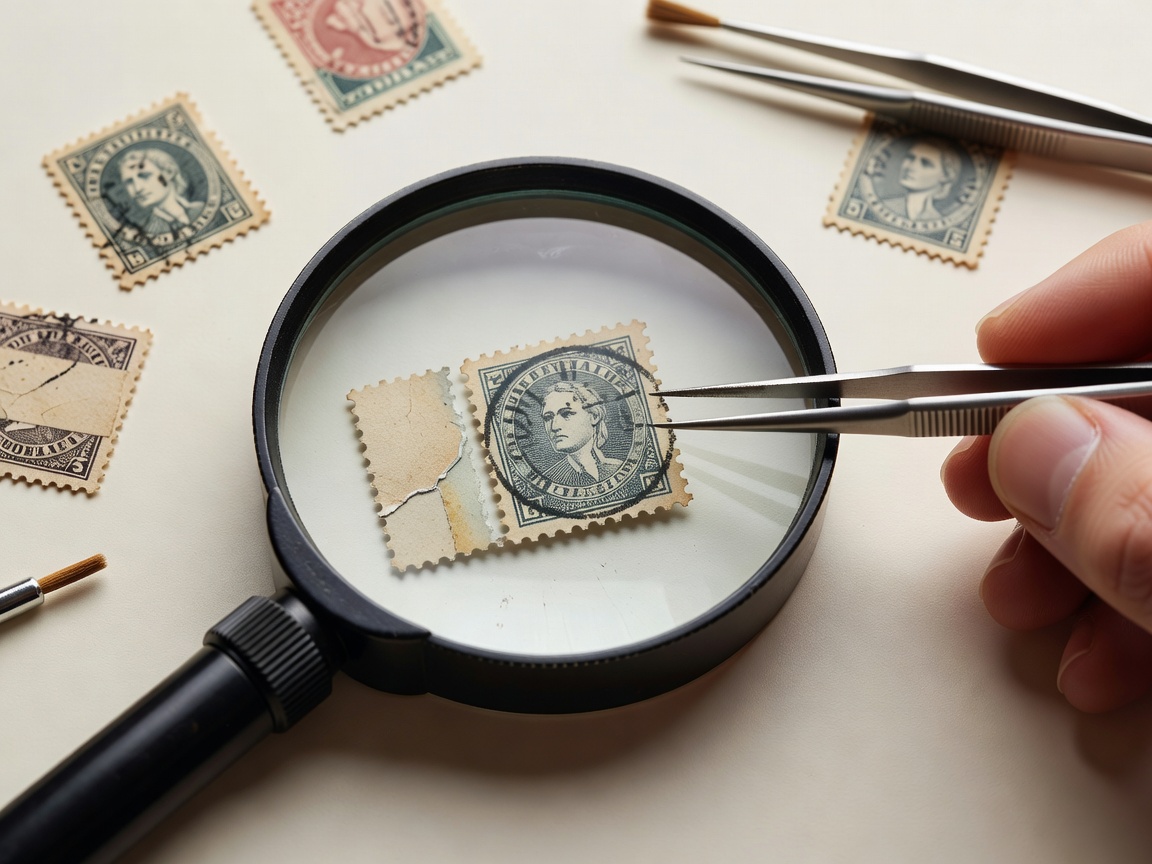
Start with the front
Centring describes how well the printed design sits within the perforated edges. A stamp with the design close to one side can still be collectible, but the imbalance should be noticed. Colour should be considered with care. Some stamps vary naturally by printing, paper or age, while others have faded through light or chemical exposure. Do not call a shade rare because it looks different on the table. Put it beside a reliable reference example if you have one, and label uncertainty plainly.
Look for thins, tears, creases and stains. A thin is an area where paper has been rubbed or peeled away, often visible when light passes through the stamp. A crease may be obvious from the front or only clear when the stamp is tilted. A stain can come from moisture, album materials, gum disturbance or storage. Each fault affects display and handling, even when the design remains attractive.
Check the perforations
Perforations are the holes or teeth around many stamps that allow separation from a sheet. Short perforations, pulled corners and clipped edges are common faults. A perforation gauge can identify spacing, but the first job is simpler: make sure the edges are complete enough for the stamp you want to keep. Do not straighten a bent tooth with force. Paper remembers rough treatment.
- Place the stamp on a dark plain surface if the paper is light.
- Lift with tongs and turn it slowly.
- Check each corner before the sides.
- Separate damage from normal issue features; some stamps were not perforated.
- Record serious faults so you do not mistake the stamp for an upgrade later.
Understand gum and hinges
Gum is the adhesive layer on the back of an unused stamp. Mint stamps may have original gum, disturbed gum, hinge marks or no gum. A hinge mark shows where a stamp was once attached to a page using a small gummed hinge. For some collecting areas, gum condition strongly affects desirability. For others, especially used stamps and postal history, gum may matter less or not at all.
Never lick or moisten a stamp to “test” gum. Never try to improve gum. Added or altered gum creates problems rather than solving them. If the back is important to your collection, store the stamp so that the reverse can be inspected without repeated handling.
Read cancellations carefully
A cancellation can improve or reduce interest depending on the collection. A heavy cancel may obscure the design in a country collection but become the main point in a postmark collection. A light cancel can show the design well but reveal little about postal use. A socked-on-the-nose cancellation, where the mark is centred and clear, appeals to collectors who value legible postal evidence.
Do not remove a stamp from a cover just because the stamp appears ordinary. The cancellation, address, postal markings and route can make the complete item more informative than the stamp alone. When in doubt, keep the cover intact and set it aside for later identification.
Decide when a fault is acceptable
A damaged stamp can still serve a purpose. It can fill a space temporarily, illustrate a cancellation, act as a comparison copy or carry family meaning. The key is honesty. Label it as a space filler, damaged reference, duplicate or sentimental item. That keeps the main album accurate and prevents disappointment if you later compare it with a cleaner example.
Use condition as motivation
Pick one album page and inspect every stamp again. Keep the best example, mark the faults on the others, and let the page improve without needing a single new purchase.