Grow the collection. Do not let it grow wild.
The next stamp is easy to buy and hard to choose. Use swaps, fairs, dealers and lists with a clear purpose, so expansion strengthens the album instead of filling boxes.
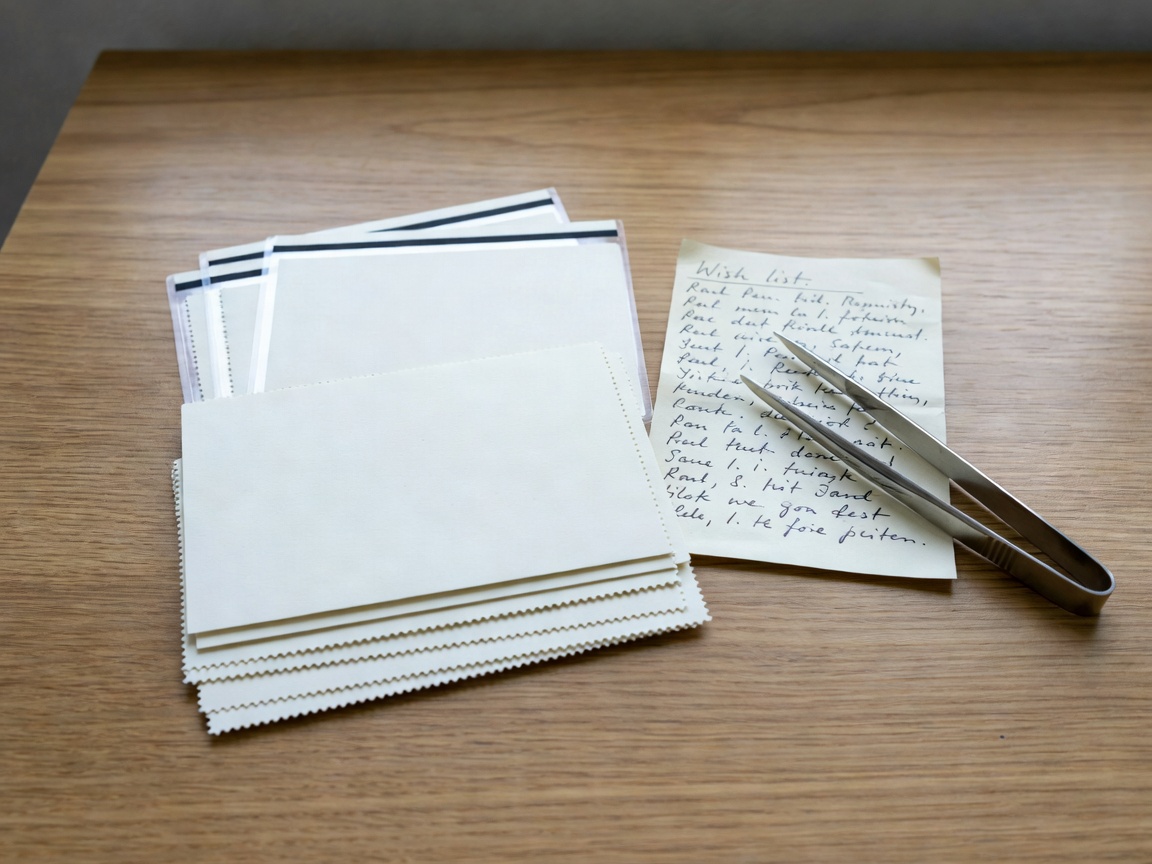
Build a wish list from the album, not from excitement
A wish list is a record of stamps, covers or reference items that would improve your collection. Write it after looking at the album. If the page has a clear gap, describe the gap. If the section needs a better example, write what “better” means: clearer cancellation, sounder perforations, stronger centring, complete cover, cleaner paper or a more relevant subject.
A wish list should also include exclusions. If you already have enough mixed-world definitives, say so. If damaged space fillers are no longer useful, say so. This protects you when a large lot looks tempting. A lot is a group sold together; it can be useful for discovery, but it can also bring more sorting than progress.
Use swaps with plain descriptions
Swapping works best when both sides describe material honestly. Separate duplicates by topic, country or condition. Mark obvious faults. Do not hide thins, stains or missing perforations inside a bundle. A collector who receives a clear, fair packet is more likely to keep trading, and you avoid building your own collection on unclear expectations.
- Make a duplicate group that is genuinely spare.
- Remove stamps with serious faults unless they are clearly labelled as reference or space fillers.
- State your collecting focus in ordinary words.
- Agree whether covers should stay intact.
- Keep a note of what left your collection, so you do not search for it later.
Approach dealers and fairs with questions ready
A dealer is a seller who handles philatelic material as trade. A fair brings sellers and collectors together. These routes can be useful because you may see condition before buying and ask questions about identification, storage or provenance. Keep the questions specific. “Do you have anything for my collection?” is too wide. “Do you have used examples with readable cancellations from this area?” is easier to answer.
When inspecting material, ask before removing items from stock cards or sleeves. Use tongs if permitted. Check both sides where appropriate. If a stamp is beyond your knowledge, write down the description and compare it with a catalogue or trusted reference later. Walking away to think is a collecting skill, not a defeat.
Understand auctions and online listings cautiously
An auction can offer specialised material, but it also requires careful reading. Descriptions use condition terms, catalogue references and sometimes abbreviations. Learn those terms before bidding. Online listings can show useful images, but images do not always reveal paper thinning, gum disturbance, repairs or the full context of a cover. Ask clear questions where the platform allows it, and avoid assuming that a brief description contains everything you need to know.
Do not treat catalogue value as a target. Treat it as one piece of reference information. Your own criteria should remain visible: fit, condition, authenticity concerns, storage needs and whether the item advances the collection rather than merely adding volume.
Let growth create better pages
Every new item should do a job. It can fill a chosen space, replace a weaker example, illustrate a new sub-section, support a postal-history note or become swap material. If it does none of those things, it belongs in a holding area, not the album. Review holding areas regularly. Otherwise the collection splits into an album you enjoy and boxes you avoid.
Take the next step
Write a short wish list from one album section. Take that list, not a vague appetite, to the next swap, fair or search.