Give every stamp a place it can leave.
Good organisation is not about making a permanent monument on the first attempt. It is about arranging stamps so you can find them, understand them and move them safely when your collection improves.
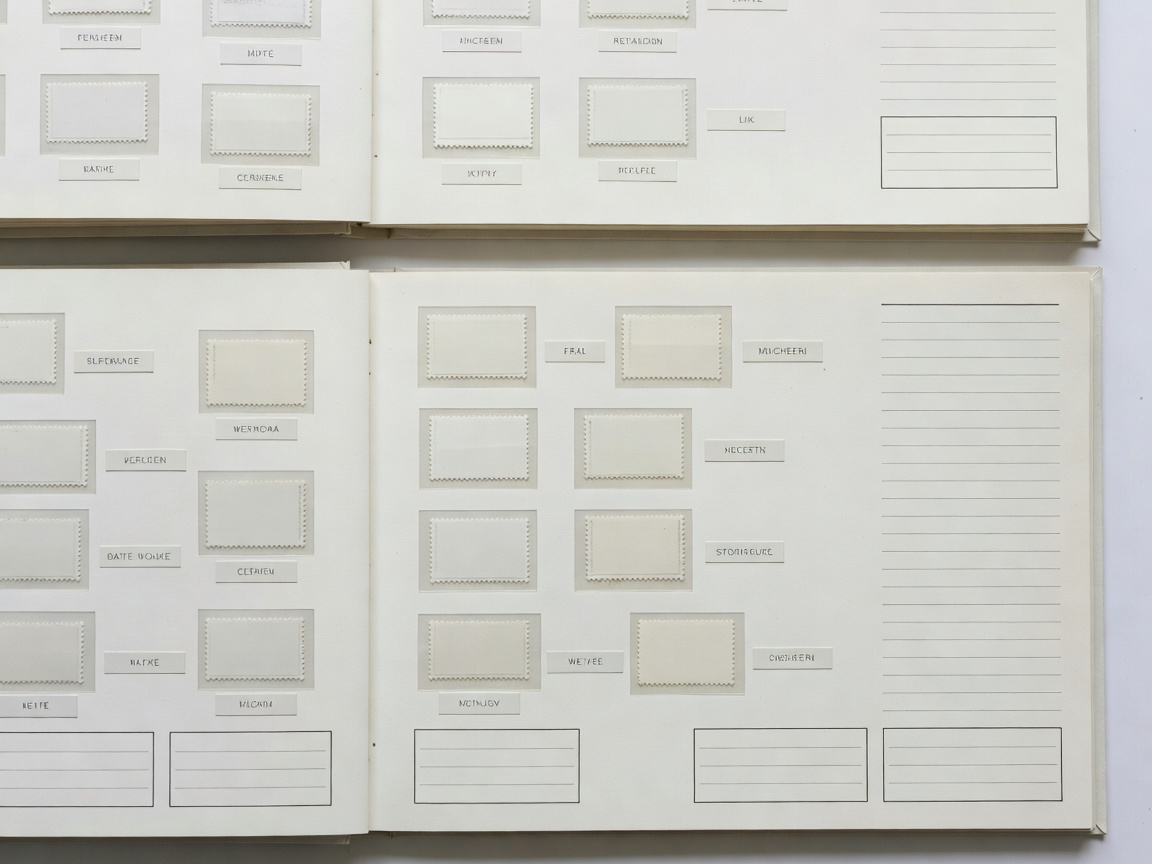
Pick a structure before placing stamps
An album page should answer a basic question: why are these stamps together? The common structures are chronological order, catalogue order, subject order, issuing country, face value, design type or postal use. Chronological order follows broad issue sequence. Catalogue order follows a reference listing. Subject order groups visual themes. Postal-use order may place covers and stamps by service, cancellation or route.
Do not mix structures on the same page unless you explain the reason in a note. A page that starts chronologically and ends by colour will look lively, but it will also become hard to maintain. If you want a display page, make one. If you want a reference page, keep it disciplined.
Use temporary storage while the plan settles
A stock book is ideal while you are still learning because stamps slide behind strips and can be rearranged. Use it as the working area. Once the order feels stable, move selected stamps to album pages with mounts or another non-damaging method. Avoid household adhesives, tape and glue sticks. They are not made for philatelic paper and can stain, harden or become impossible to reverse.
- Sort stamps into broad groups on stock pages.
- Write a pencil heading for each group on a separate slip.
- Leave space where you expect related stamps to appear later.
- Move only settled choices to display pages.
- Keep duplicates away from the main page so the album does not become a storage dump.
Label what you know
A useful label can include issuing country or authority, design subject, face value, mint or used status, cancellation note, paper note, watermark note, perforation note and source note. Use only the items you can support. If a watermark is uncertain, write “watermark not checked” rather than guessing. If a cancellation is partly legible, record the legible portion and leave the rest alone.
Source notes help later. “From family correspondence” is a different sort of knowledge from “from mixed packet”. A note does not need drama to be useful. It simply records how the stamp reached the collection, which can prevent future confusion when similar examples appear.
Leave room without inventing gaps
Collectors often leave spaces for missing stamps. This can motivate, but it can also turn the album into a wall of absence. If a gap represents an item you genuinely intend to seek, mark it. If it represents every possible variety in a catalogue, be careful. The page can start to scold you instead of inviting you back.
Use divider pages for broad sections. Use small slips for questions. Use a separate list for wants, because want lists change faster than mounted album pages. Keep the album itself calm. It should show what you have and what you understand, not every possible thing you do not yet own.
Protect condition through handling
Store albums upright or flat according to the binder design, away from damp, heat and direct light. Do not overfill pages. If stamps press hard against one another, perforations can catch. If covers bend around a page edge, use a larger storage format. The correct storage is the one that supports the object without stress.
Act today
Take one disordered page and rebuild it with a single structure. Add labels on slips first. When the order still makes sense after a second look, commit the page.